

From Wet Clay to Finished Pottery: The Pottery Firing Process

Updated: Sep 16
What Happens to Your Pottery After Class?
If you’ve taken a pottery class at Throw Clay LA, you may have wondered what happens to your piece after you leave it behind at the studio. Before it is ready for pickup, it has to dry completely, be bisque fired, glazed, fired again, cooled, inspected and finished.
The entire pottery firing process takes time, and much of it happens behind the scenes. Here’s the journey your pottery takes from wet clay to a finished ceramic piece ready to take home.

1. Your Piece Has to Dry Completely
After class, your pot is placed on a dedicated drying shelf. This stage is more delicate than most people realize as unfired clay is extremely fragile. Clay needs to dry slowly and evenly to avoid cracks.
Thick bases? Slow drying.
Handles or attachments? Even slower drying.
Hot, dry LA days? We manage airflow carefully.
Drying time varies depending on the size, thickness and construction of the piece, so this stage can't be rushed.
2. Bisque Firing: The Clay Turns to Ceramic
Once your piece is completely dry, it is ready for its first trip through the kiln, called a bisque firing. This firing permanently changes the dried clay into ceramic while leaving it porous enough to accept glaze.
At Throw Clay LA, our studio team handles the loading, firing and unloading of the kilns. If you'd like to understand what happens inside the kiln during this stage, read our guide to bisque and glaze firing.

3. Glazing Bisque-Fired Pottery
After the bisque firing, glaze is applied to the pottery. For our one-time pottery experiences, you choose your glaze color before leaving the studio and our team glazes your pieces for you. Students in six-week courses learn to glaze their own work as part of the ceramic process.
Glazes can be dipped, poured or brushed depending on the glaze and the piece. The color of an unfired glaze looks very different from the finished surface that emerges from the kiln.
That transformation is the result of glaze chemistry: minerals and other glaze ingredients react to heat as the kiln reaches its firing temperature, producing the final color, texture and surface. Our Journal article, Exploring Glaze Chemistry: The Science Behind the Magic, takes a closer look at what happens.
4. Glaze Firing: Transformation Inside the Kiln
Once glazed, the pottery returns to the kiln for its final firing. At Throw Clay LA, student work is glaze fired to Cone 6. During the firing, the clay body matures and the glaze melts and bonds to its surface.
After reaching the required heatwork, the kiln must cool slowly before it can be opened. Only then can we see the final glaze colors and surfaces.
5. Quality Check and Pickup
Once the kiln has cooled completely, our team unloads and inspects each piece. We check the finished pottery for firing or glaze issues and complete any necessary finishing before it is packaged.
Each piece is then packaged, labeled and moved to our pickup area. We’ll email you when your pottery is ready to be picked up.
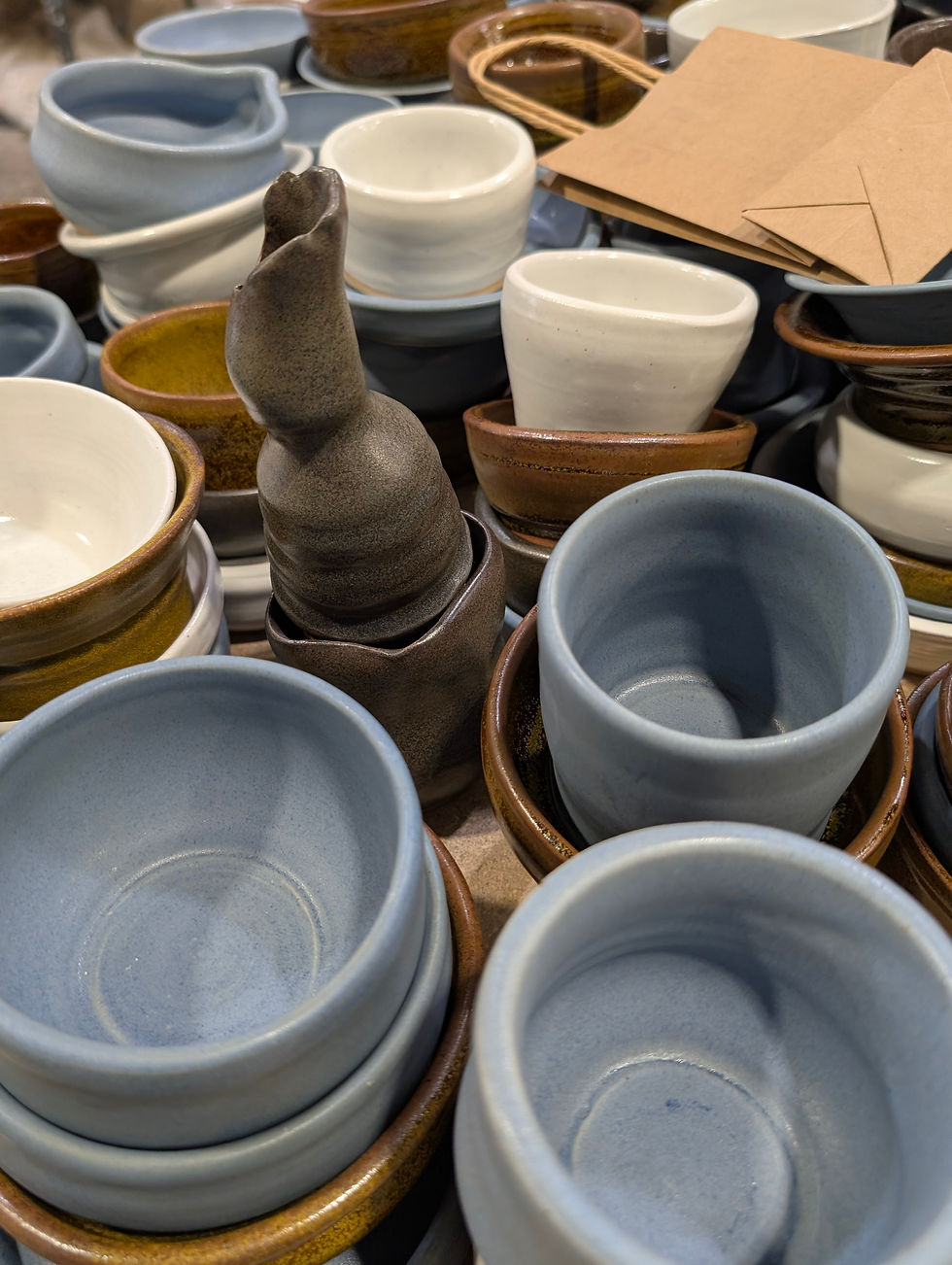
Why the Pottery Firing Process Timeline Varies
Every piece is different. Weather, thickness, kiln load size, and glaze choice all play a role.
On average:
One-time class pieces: 4–5 weeks
Six-week course work: fired throughout the course as pieces are completed
Large or complex work: can take a little longer
Our priority is ensuring your piece is safe, sound, and beautifully fired.
The Hidden Labor Behind Your Piece
Each finished piece represents a series of steps handled by our studio team after you leave:
Monitoring pieces as they dry slowly
Trimming One-Time Potter’s Wheel pieces
Kiln loading and unloading
Applying glaze to One-Time pieces
Managing bisque and glaze firing cycles
Inspecting and finishing fired work
Packaging, labeling and organizing finished pieces for pickup
All of this happens between the time you leave your pottery with us and the time you receive the email that it is ready.
About Throw Clay LA
Whether you’re curious to try pottery for the first time or ready to develop your skills, Throw Clay LA offers one-time pottery experiences, six-week Build Skills courses, and six-week Refine & Explore courses in wheel throwing and handbuilding at our studio in Downtown Los Angeles.
We also offer pottery workshops and private pottery events for groups, while studio memberships provide experienced potters with dedicated space and time to pursue their own work, along with access to studio equipment, glazes, firing services and free weekly Member Clinics.


